
Shift handovers in hospitality: how to actually pass the kitchen on
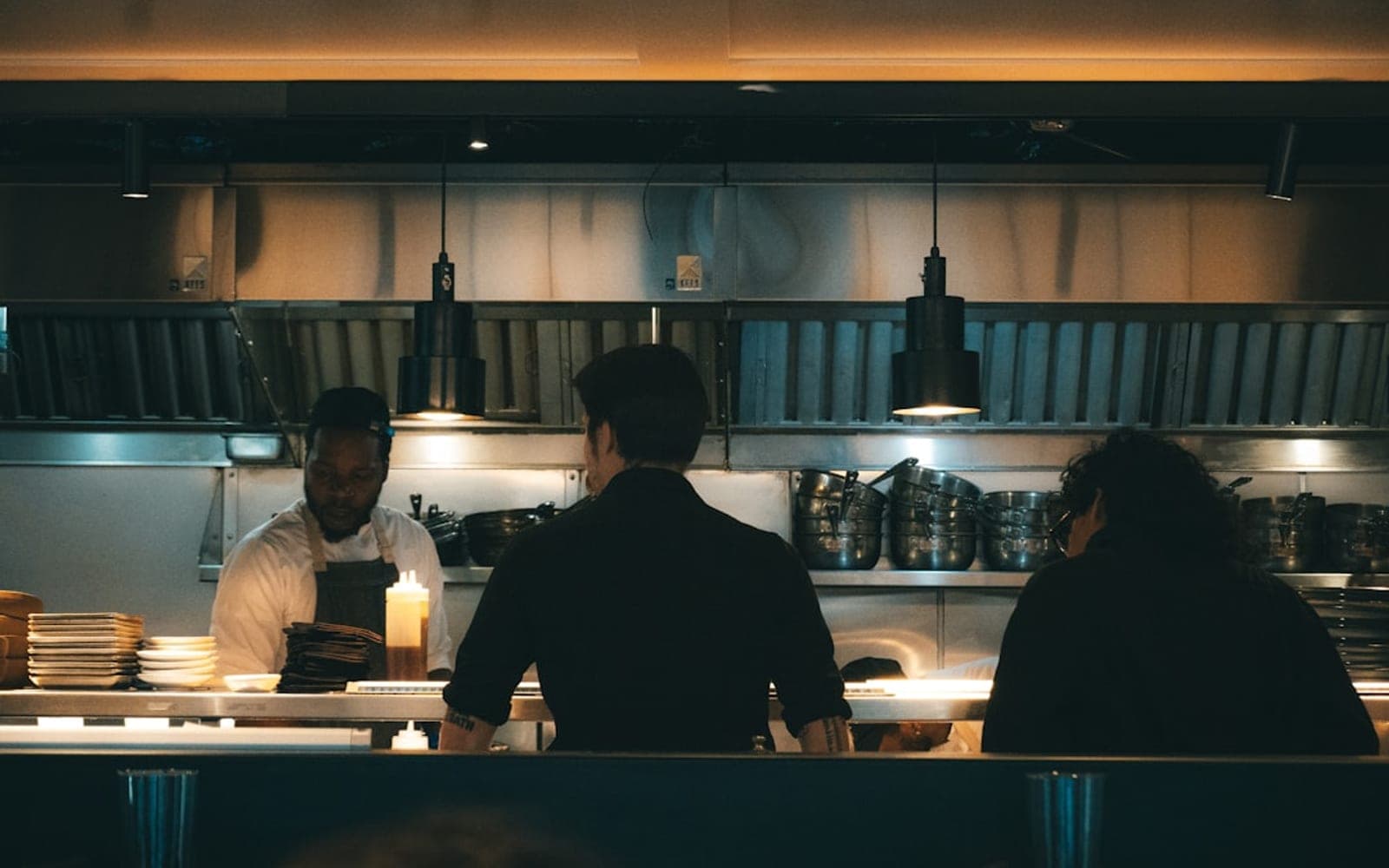
A Sunday morning at Welsh Back, somewhere around 8.15am. The AM chef walks in, fires up the pass, opens the under-counter chiller to pull yoghurt and granola for the breakfast set, and notices the milk feels lukewarm. Not warm enough to throw out on sight. Warm enough to make him pause. He checks the thermometer. 9 degrees.
What he didn't know, because nobody told him, was that the chiller had been cycling warm intermittently from about 6pm Saturday. The Saturday PM sous had clocked it, scribbled "chiller 3 running warm, check temps AM" on a Post-it, stuck it to the pass, and gone home. Somewhere between Saturday close and Sunday open, the Post-it had ended up in the bin with the rest of the day's debris. We binned about £400 of stock that morning and ran a half-menu until lunchtime.
That's the cost of a bad handover. Not always £400, sometimes much more, sometimes a customer who never comes back because we forgot they were waiting on a callback about Friday night's bill. This is a guide to what a handover actually needs to carry, how to run it so people listen, and why the longest gap between shifts is where most kitchens come unstuck.
Why this matters
Handovers are the cheapest piece of kitchen infrastructure you have. They cost nothing to run well, and they prevent the failures that actually hurt you: food safety incidents, stock waste, repeat customer complaints, and the slow erosion of staff trust when people feel set up to fail by the shift before them.
An EHO inspector won't ask to see your handover sheet by name. But they will ask how you knew the chiller was working when you opened up. They'll ask how the AM chef knew which prep was rotated and which was fresh. Under the Food Safety Act 1990 and the FSA's HACCP guidance, you're expected to demonstrate continuous control of temperature and traceability, not just control during the hours the manager happens to be on site. A handover that records equipment status and prep dates is part of how you prove that.
It also matters for the staff. The single fastest way to demoralise a chef is to drop them into a kitchen where the last shift left them a mess they don't understand. After a few rounds of that, the good ones leave.
What a handover actually needs to carry
Forget elaborate templates for a second. A handover is doing its job if the incoming shift can answer five questions without having to phone anyone:
- Prep status. What's done, what's in progress, what's been pulled from the freezer to defrost, what needs doing before service. Dates on everything. "Bolognese made Saturday, use by Tuesday" not "Bolognese in the walk-in".
- Equipment status. Anything not working, anything working but flaky, anything serviced today, anything that needs the engineer. The Welsh Back chiller story belongs here.
- Customer complaints in flight. Anything unresolved. A table promised a callback, a deliveroo refund pending, a regular who walked out unhappy. The next shift needs to know before that customer rings or walks back in.
- Deliveries due. Who's coming, roughly when, what's been short-shipped recently so you know to check. If the fish guy is late again, the AM needs to know not to plan the lunch special around scallops.
- Staffing changes. Who called in, who swapped, who's training someone today, who's leaving early for a dentist appointment. Whoever's running the next shift can't plan stations without this.
Five things. If a handover format doesn't capture those five, it's not a handover, it's paperwork.
Written versus verbal: you need both
This is where most operators get it wrong. They pick one.
Verbal alone is a memory test you'll fail. The Saturday PM sous tells the closing KP about the chiller, the closing KP goes home, the AM chef arrives, no one passes anything on. Verbal-only handovers depend on everyone being on shift at the same time, which almost never happens in hospitality. There's always a gap. Sometimes the gap is 8 hours, sometimes it's 60.
Written alone is a CYA exercise that nobody reads. I've seen kitchens with beautiful laminated handover sheets in a folder under the pass, every line filled in, and nobody on the AM shift has looked at it in months. Writing things down without a conversation makes the writer feel they've done their job. It doesn't actually transfer knowledge.
You need both, in this order. The outgoing shift writes the handover during the last 20 minutes of service wind-down, while it's fresh. Then there's a verbal walkthrough with whoever is taking over, ideally at the pass, pointing at the actual things being described. "This is the chiller that's been running warm. Here's the temp log. I've put the dairy in chiller 2 just in case." The written sheet exists so that when the AM chef arrives at 6.30am and the PM team are long gone, the information is still there.
Verbal handovers are a memory test. Written handovers are a paperwork exercise. You need both, and the written one has to survive the bin.
The handover sheet itself
Keep it on one side of A4. If it runs to two pages, nobody reads page two. The format we settled on at Welsh Back, after about three iterations, had these sections:
- Date, shift, who's handing over, who's receiving
- Prep board: what's done, dates, what's needed for next service
- Equipment: anything broken, flaky, or serviced
- Live customer issues (with names and phone numbers if applicable)
- Deliveries expected, with supplier and rough window
- Staff notes for the next shift
- A free-text "anything else" box at the bottom
The sheet lives in a clipboard at the pass, not in a folder under the pass. Folders are where information goes to die. The clipboard is visible, the current sheet is on top, the previous week stays underneath for reference. At the start of the new week the old ones go in a box in the office for two months, then get binned. That gives you a paper trail if an EHO ever asks how you knew the chiller was fine on Tuesday.
A Post-it is not a handover sheet. A Post-it is a thing you write in the moment and then transfer onto the handover sheet before you leave. The Welsh Back disaster was a Post-it that never made it onto the sheet.
The long handover: Friday PM to Monday AM
This is where most kitchens lose it. The handover from AM Friday through to AM Monday can be 60-plus hours, four shifts, with closing teams on Friday and Saturday nights who often never overlap with the AM team that opens Monday.
A few things that worked for us:
- The Sunday close handover gets extra time. Whoever closes Sunday is writing for the Monday AM team, who they will not see. That sheet needs to be more detailed than a midweek one, and the closing manager checks it before they leave.
- Critical equipment issues get phoned in, not just written. If the chiller is flaky on Saturday night, the head chef gets a text on Sunday morning, regardless of whether they're on shift. Some things can't wait for the next person to read a clipboard.
- Monday AM gets an extra 15 minutes. Built into the rota. The opening chef arrives 15 minutes earlier than they would midweek, because there's more to absorb. We paid for those 15 minutes and considered it the cheapest insurance we had.
- Deliveries flagged separately. Monday is delivery-heavy in most kitchens. If anything was short or wrong on Saturday's delivery, the Monday AM needs to know before the Monday delivery arrives so they can chase the credit.
The principle is simple. The longer the gap, the more rigorous the handover. Treat the Friday-to-Monday handover like you're writing for a stranger, because in practical terms you are.
Common mistakes
- Writing the handover after service, not during. By the time the kitchen is clean and the team is at the door, nobody is in the mood to write a detailed sheet. They write three lines and leave. Build it into wind-down, not after it.
- Using one-word entries. "Chiller fine" tells the next shift nothing. "Chiller 3 temp logged 4°C at 22:00 close, gasket replaced Tuesday, no issues since" is a handover. The first one is a tick box.
- No verbal walkthrough when shifts overlap. If the PM and AM teams are in the building at the same time, even for 10 minutes, that's a handover conversation. Use it. Don't let people leave the kitchen without it.
- Letting the manager skip the sheet. If the head chef or duty manager doesn't fill it in on their shifts, nobody else will either. The standard is set by whoever is most senior, every time.
- Storing it where nobody looks. Folder under the pass, drawer in the office, app nobody has the login for. The handover sheet lives where the next shift is standing in the first 5 minutes of their day.
- Not capturing customer issues. Front of house complaints from Saturday night that need a Sunday callback get forgotten constantly. Those belong on the handover sheet too, not just in the manager's head.